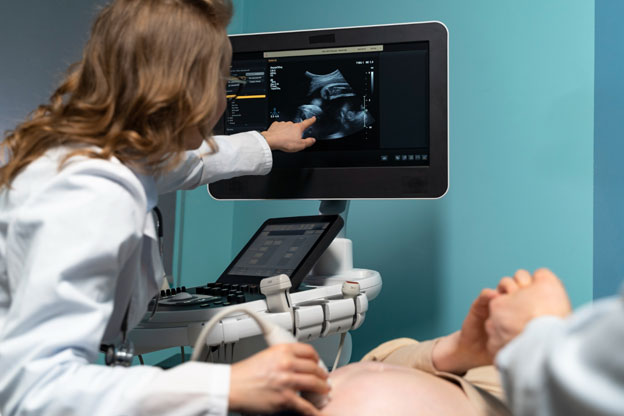
Fetal medicine is a specialised branch of modern healthcare focused on identifying, monitoring, and managing conditions that may affect a baby before birth. At Motherland Hospital, our Fetal Medicine Department enables early detection of structural, genetic, and chromosomal abnormalities, allowing families and doctors to plan the safest course ahead. Through advanced screening, diagnostic techniques, and coordinated prenatal care, we empower expecting parents with clarity, informed choices, and confidence. Working closely with obstetricians, neonatologists, pediatric surgeons, and genetic experts.

Ultrasound remains the primary and most effective screening method for detecting fetal structural abnormalities. Markers such as Nuchal Translucency, when combined with other parameters, provide valuable insight into chromosomal risks including Down syndrome.
Blood-based screening tests, when added to ultrasound findings, significantly improve diagnostic accuracy. NIPT / NIFTY is a highly sensitive screening test that analyses fetal DNA from the mother’s blood, offering excellent detection rates for chromosomal conditions without increasing miscarriage risk.
For definitive diagnosis, invasive tests such as amniocentesis, chorionic villus sampling, and fetal blood sampling may be recommended. These procedures are performed under ultrasound guidance with strict safety protocols to ensure accuracy and minimise risk.
In higher-order multiple pregnancies, selective fetal reduction may be advised to reduce risks to both mother and remaining fetuses. This procedure helps improve pregnancy outcomes by carefully managing complex gestations.
Ultrasound remains the primary and most effective screening method for detecting fetal structural abnormalities. Markers such as Nuchal Translucency, when combined with other parameters, provide valuable insight into chromosomal risks including Down syndrome.
Blood-based screening tests, when added to ultrasound findings, significantly improve diagnostic accuracy. NIPT / NIFTY is a highly sensitive screening test that analyses fetal DNA from the mother’s blood, offering excellent detection rates for chromosomal conditions without increasing miscarriage risk.
For definitive diagnosis, invasive tests such as amniocentesis, chorionic villus sampling, and fetal blood sampling may be recommended. These procedures are performed under ultrasound guidance with strict safety protocols to ensure accuracy and minimise risk.
In higher-order multiple pregnancies, selective fetal reduction may be advised to reduce risks to both mother and remaining fetuses. This procedure helps improve pregnancy outcomes by carefully managing complex gestations.
Compassionate care backed by medical excellence.
You can ask anything you want to know — feedback or queries.